


Loyalty guide
How to build a business case for loyalty
Marketing teams know that loyalty can drive growth. The challenge is getting the budget and buy-in to make it happen. That starts with a business case that speaks the language of revenue, not rewards.

Turn your idea into an investment
Loyalty programs can drive measurable revenue growth, but securing budget requires a clear, financially grounded business case. To gain approval, loyalty needs to be positioned as an investment with quantifiable impact, not just a marketing initiative.
A business case for a loyalty program should clearly demonstrate how it drives revenue, improves customer retention, and delivers measurable ROI.
1. Position the loyalty program as a revenue driver
One of the most common mistakes is focusing on features like points, rewards, or campaign mechanics. Leadership is not evaluating features. They are evaluating financial impact.
Anchor your business case around:
- Revenue growth
- Customer value
- Marketing efficiency
Shift the conversation from “What does the program do?” to “What measurable business impact will it deliver?”

2. Include key metrics for your loyalty program
To make your business case credible, tie loyalty directly to measurable outcomes and objectives.
The most important metrics include:
- Customer lifetime value (CLV)
- Purchase frequency
- Average order value (AOV)
- Retention rate
- Incremental revenue
These metrics clearly show how loyalty contributes to sustainable growth.
3. How to calculate loyalty program ROI (simple model)
Your business case doesn’t need to be overly complex. In fact, simpler models are often more effective.
Step 1: Start with a baseline
- Number of active customers
- Average annual spend
- Current purchase frequency
Step 2: Model conservative improvements
- +10–15% increase in frequency
- +5–10% increase in AOV
- +3–5% improvement in retention
For example:
If you have 50,000 active customers and a €200 average annual spend, a 15% increase in customer value = €1.5M incremental revenue.
Even modest improvements across key metrics can generate significant financial impact.

4. Include loyalty program costs
A strong business case builds trust by presenting a complete financial picture.
Include:
- Platform and licensing costs
- Implementation and integration
- Ongoing management and operations
- Reward and incentive costs
Transparency strengthens credibility and makes ROI projections more justifiable.
5. Highlight how loyalty improves marketing efficiency
Loyalty programs do more than drive revenue. They improve how efficiently marketing budgets are used.
With better targeting and first-party data, you can:
- Reduce reliance on broad discounting
- Improve campaign conversion rates
- Lower cost per acquisition over time
This is especially important as acquisition costs continue to rise. Position loyalty as a way to increase output without increasing spend.

6. Align loyalty with business strategy
To gain executive support, align loyalty with broader business goals, such as:
- Revenue growth
- Margin improvement
- Customer retention
- First-party data strategy
- Digital transformation
The closer loyalty is tied to these priorities, the easier it becomes to justify investment.
7. Choose loyalty technology that proves ROI
Your business case is only as strong as your ability to prove results. That’s why the platform you choose matters.
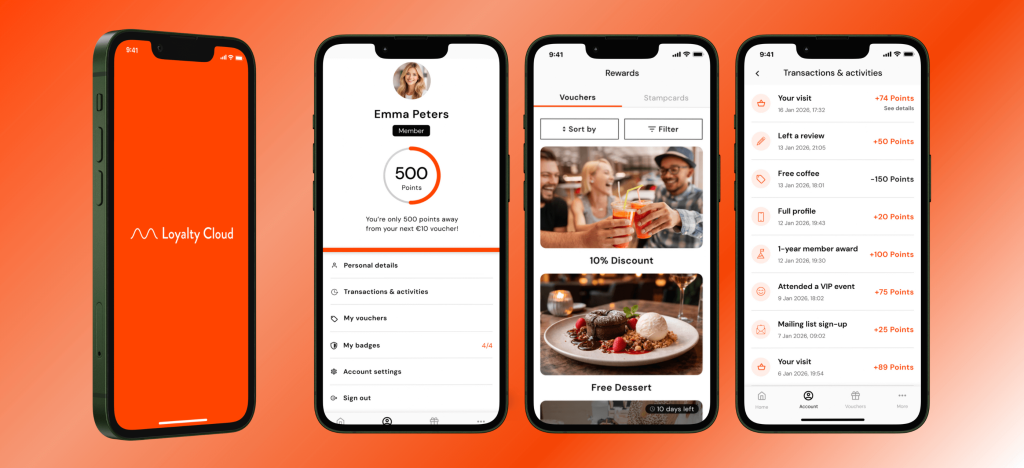
A platform like m–wise Loyalty Cloud enables you to:
- Track and report on key KPIs in real time
- Measure incremental revenue and campaign performance
- Personalise offers and customer journeys at scale
- Integrate seamlessly with your existing marketing ecosystem
This ensures your business case is not only approved, but continuously validated.
8. What decision-makers need to approve a loyalty program
Approval comes down to clarity, credibility, and financial impact. Decision-makers are not evaluating features, they are evaluating return.
To secure buy-in, your business case must be simple, realistic, and clearly linked to revenue outcomes. When stakeholders can quickly see the financial impact, approval becomes much easier.
Build your business case well, and loyalty becomes an investment that’s impossible to ignore.
Want to turn your loyalty idea into reality?
Subscribe to our monthly loyalty newsletter for news, tips and trends.
What’s new in the world of loyalty
The latest loyalty news, interviews, technologies, and resources.

How to build a business case for loyalty
Prove loyalty’s impact. Learn how to build a strong business case for loyalty that secures internal approval and wins budget.
Read post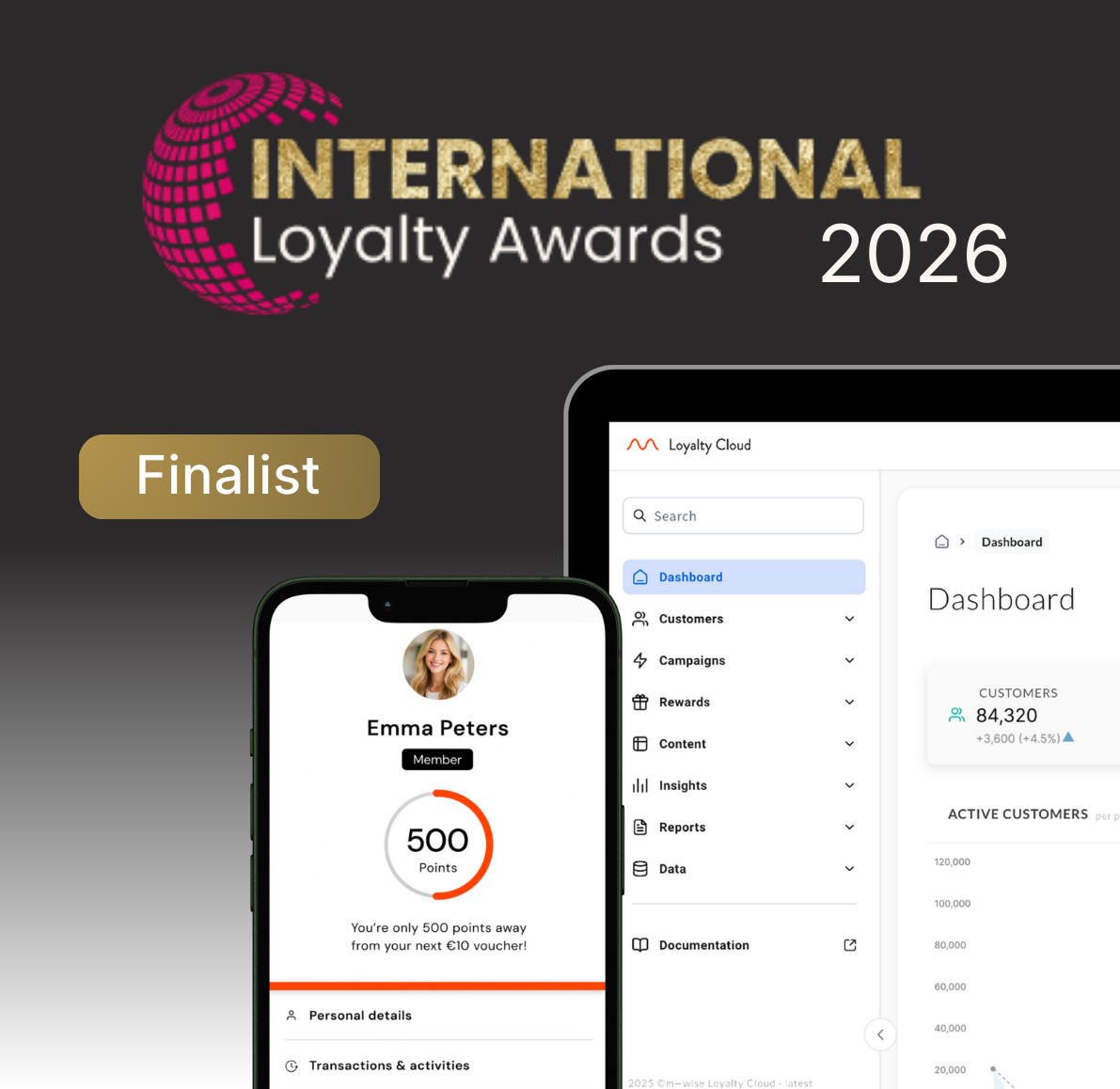
m–wise is an International Loyalty Awards 2026 finalist
m–wise has received six nominations at the prestigious International Loyalty Awards, alongside our clients Moller Auto and Copaco.
Read post
The key loyalty trends to watch in 2026
Customer loyalty never stops evolving. Explore the trends shaping 2026 and how they will influence loyalty programs this year.
Read post
Double win for m–wise at the European Loyalty Awards 2025
m–wise was named a winner in two categories at the inaugural European Loyalty Awards, alongside our clients Velder and Moller Auto.
Read post